One Nation, One Syllabus for Physiotherapy: A Major Change Every Physiotherapist Should Know
One Nation, One Syllabus for Physiotherapy: A Major Change Every Physiotherapist Should Know
By Prof. Dr. Ravindra Karbhari Aher (PT)
A new national direction is emerging in physiotherapy education in India—and surprisingly, many physiotherapy students, teachers, and clinicians are still unaware of it.
For years, physiotherapy education in India has faced a major challenge: different universities and institutions have followed different curricula, subject structures, examination patterns, clinical requirements, and academic standards.
Now, this is beginning to change.
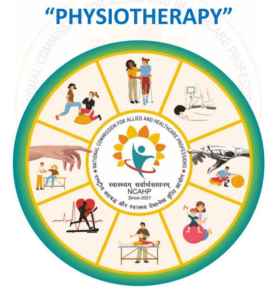
Under the National Commission for Allied and Healthcare Professions (NCAHP) framework, India is moving towards greater uniformity in Allied and Healthcare education. The recently approved Competency-Based Curriculum for Physiotherapy provides a national framework for Bachelor of Physiotherapy (BPT) and Master of Physiotherapy (MPT) education.
What is “One Nation, One Curriculum”?
The idea is simple but powerful:
A physiotherapy student should receive a nationally standardized education irrespective of the state or university in which they study.
The NCAHP curriculum has been developed specifically to bring standardization to physiotherapy education across India. The curriculum document states that an earlier model curriculum was developed with the objective of achieving uniform standards in undergraduate and postgraduate physiotherapy education.
This could significantly reduce the differences currently seen between universities.
What changes for BPT students?
The NCAHP framework describes Bachelor of Physiotherapy as a 5-year program, including the prescribed academic and clinical training structure.
More importantly, the focus is shifting from simply completing subjects and passing examinations to competency-based education.
The expected graduate should be capable of:
· Examining and assessing patients
· Evaluating movement and functional problems
· Planning and providing physiotherapy management
· Promoting health and preventing disability
· Applying research evidence to clinical practice
· Communicating effectively with patients and healthcare professionals
· Providing ethical and patient-centered care
The curriculum also specifies minimum academic and clinical requirements, including teaching hours, practical/clinical training, and credit calculations.
This represents an important philosophical change:
From “What subjects did you study?” to “What can you actually do as a physiotherapist?”
What about MPT?
The national framework also addresses Master of Physiotherapy education.
The MPT program is recommended as a minimum two-year postgraduate program, with specialization and greater emphasis on advanced clinical practice, research, and academics.
Common components include areas such as
· Research methodology
· Biostatistics
· Evidence-based practice
· Biomechanics and therapeutics
· Exercise physiology
· Ethics and administration
· Educational methodology
· Clinical examination
· Dissertation/research
· Advanced specialty knowledge
The framework also identifies specialty pathways such as musculoskeletal sciences, neurosciences, and cardiopulmonary sciences, among others.
Why is this important?
Imagine two physiotherapy students—one studying in Maharashtra and another in Kerala.
If both are educated under a nationally standardized competency-based framework, their minimum educational expectations, competencies, and professional preparation become much more comparable.
This can potentially improve:
1. Quality of education: Colleges will have a national benchmark to follow.
2. Clinical competency: Greater emphasis can be placed on what students must be able to perform clinically.
3. Mobility of professionals: A more standardized educational system can make professional qualifications easier to understand across states.
4. Postgraduate education: MPT education can become more structured and consistent nationally.
5. Recognition of Physiotherapy as a Profession: Standardized education strengthens professional identity and public confidence.
One Nation, One Curriculum—but not one teaching style
Standardization does not necessarily mean that every college must teach in exactly the same way.
The national curriculum establishes the minimum framework and competencies.
Teachers can still use different teaching strategies, clinical cases, demonstrations, technology, simulation, research activities, and innovative methods to achieve those competencies.
In other words, the destination becomes standardized; the teaching journey can remain innovative.
The biggest challenge: Awareness
Perhaps the most important issue right now is awareness.
Many physiotherapy students and even practicing physiotherapists may not yet be familiar with the NCAHP curriculum and its implications.
The government has stated that the NCAHP competency-based curricula are being implemented in the context of Academic Year 2026–27, making this especially important for colleges, faculty members, and students entering the profession now.
The UGC has also taken a significant step toward uniformity in Allied and healthcare education. A notification issued in August 2026 covers new and restructured UG and PG degrees under the NCAHP regulatory framework, explicitly describing the move as supporting the “One Nation, One Curriculum” mandate. Physiotherapy is among the disciplines covered.
What should physiotherapy colleges do now?
Every physiotherapy institution should start asking:
· Are we aware of the latest NCAHP curriculum?
· Does our current syllabus match the national competency requirements?
· Are our clinical postings adequate?
· Are students receiving sufficient hands-on training?
· Are faculty members prepared for competency-based teaching?
· Do our assessments measure clinical reasoning—not just memory?
· Are laboratories and clinical facilities aligned with the new requirements?
A new chapter for physiotherapy education
India has thousands of physiotherapy students preparing to become healthcare professionals.
The success of this national curriculum will ultimately depend not only on government regulations but also on how seriously universities, colleges, teachers, and students implement it.
The real goal should not simply be
“One Nation, One Syllabus.”
The bigger goal should be
“One Nation, One Standard of Physiotherapy Competence.”
If implemented effectively, the NCAHP framework could become one of the most important milestones in the modernization and standardization of physiotherapy education in India.
For every BPT student, MPT student, faculty member, and physiotherapist in India, this is a development worth understanding—not tomorrow, but now.
tags:
Physiotherapy books, musculoskeletal physiotherapy, manual therapy, physiotherapy assessment, physiotherapy textbooks, physiotherapy clinical skills, musculoskeletal physiotherapy textbooks, physiotherapy assessment and treatment, manual therapy textbooks, physiotherapy rehabilitation, and physiotherapy student books.
- Blog by Dr. Ravindra Aher (PT)
Best Selling Books
-
e-books
PG Physiotherapy CET (MCQs clinical Question bank)
₹199.00Original price was: ₹199.00.₹99.00Current price is: ₹99.00. -
Books
Clinical Physiotherapy Assessment and Treatment Skills For Musculoskeletal Dysfunctions by Dr. Ravindra K. Aher (PT)
₹2,999.00Original price was: ₹2,999.00.₹1,499.00Current price is: ₹1,499.00.